Why Mismatched Contact Details Are Keeping Your Business Off the Map
In the world of local search, your business is only as strong as the data that defines it. As a Local SEO Consultant and Google Business Profile Product Expert, I have seen countless businesses pour thousands of dollars into high-end content and backlink strategies, only to wonder why they remain invisible in the local map pack. The answer is often hidden in plain sight: NAP inconsistency. NAP stands for Name, Address, and Phone number. While many owners focus on collecting five-star reviews, Google considers mismatched NAP the 3rd largest negative search engine ranking factor. When your contact details are a mess, it sends a signal of unreliability to the algorithm, effectively acting as a “silent killer” for your google business profile seo.
The 2026 Local SEO Crackdown: Why Accuracy Matters Now More Than Ever
The landscape of local search has shifted dramatically with the March 2026 Core Update. Google has moved beyond simple keyword matching and has entered an era of aggressive entity-based verification. In early 2026, we witnessed a massive wave of profile suspensions across the United States, primarily targeting small businesses that failed to align their Google Business Profile (GBP) data with real-world credentials and third-party citations.
Google’s algorithm is no longer just looking for a business that claims to be in a certain city; it is looking for “Entity Trust.” If your GBP says you are at 123 Main St, but a local chamber of commerce listing or an old Yelp profile says you are at 456 Oak Ave, Google’s confidence in your business entity drops. In 2026, this lack of confidence doesn’t just lower your rank – it triggers a red flag for “keyword stuffing” or “misleading information,” leading to the dreaded “Profile Suspended” notification. To get your business profile reinstated after a suspension without the headache, you must first ensure your foundational data is flawless.
This crackdown is a direct response to the rise of AI-generated spam and “ghost” businesses. Google is prioritizing businesses that have a consistent, verifiable footprint across the digital ecosystem. If you want to rank google business profile assets in this environment, accuracy is your most potent weapon.
Decoding the Google Maps Ranking Algorithm (The 15/25/60 Rule)
To understand why mismatched details are so damaging, we must look at how the algorithm actually functions. Based on recent MapLift research and industry data, we can break down local rankings into the 15/25/60 rule:
- Proximity (~15%): This is the distance between the searcher and your physical location. While you cannot change where a searcher is standing, you can ensure your address is pinpoint accurate so Google knows exactly where you are.
- Relevance (~25%): This measures how well your business profile matches a search query. This includes your categories, services, and the keywords found within your NAP data. If your name includes keywords (which should be done carefully), Google uses this to determine if you are the right fit for the user.
- Prominence (~60%): This is the heavyweight of the trio. Prominence refers to how well-known and trusted a business is. Google determines prominence by looking at information it has about a business from across the web, such as links, articles, and directories.
Mismatched contact details directly attack the Prominence factor. When Google’s crawlers find conflicting information, they cannot verify the “prominence” of your entity. It creates a digital identity crisis. If you are struggling to improve local map rankings, the issue is likely that your prominence score is being suppressed by data noise.
How Inconsistent NAP Destroys Your “Prominence”
Google is essentially a giant verification engine. It crawls the entire web – Yelp, Yellow Pages, Bing, Apple Maps, local news sites, and social media. If it finds three different phone numbers or two different addresses for your business, it loses confidence that your business even exists at the location you claim. This uncertainty is a ranking anchor.
Think of it from Google’s perspective: If they show a user a business that has moved or has a disconnected phone number, the user has a poor experience. To avoid this, Google will simply promote a competitor whose data is consistent and verifiable. This is often the primary reason why your business profile stopped ranking even if you didn’t change a thing. While you were stationary, your digital footprint was decaying, and your competitors were cleaning up their citations.
Maintaining name address phone consistency is about building a “wall of trust” around your brand. Every consistent citation acts as a vote of confidence. Every inconsistent one acts as a vote of doubt. In the competitive 2026 market, you cannot afford to have doubt associated with your brand.
The Ripple Effect: Beyond SEO to User Trust
While the algorithmic impact is severe, the human impact is arguably worse. We must remember that 76% of local searches happen on mobile devices. These are users who are often on the go, looking for immediate solutions. If a customer clicks the “Call” button on a secondary directory and reaches a disconnected number, or if they drive to an old address they found on an unmanaged Bing listing, you haven’t just lost a lead – you’ve created an enemy.
Frustrated customers are significantly more likely to leave a negative review. A one-star review stating, “The address was wrong, drove 20 minutes for nothing,” is a permanent stain on your reputation that is incredibly difficult to remove. As an expert in google business profile seo, I have seen businesses lose 20-30% of their potential revenue simply because their “Infrastructure” (the NAP) was crumbling while their “Marketing” (ads and posts) was in overdrive. You cannot build a skyscraper on a swamp; you must stabilize your data foundation first.
Step-by-Step Guide: How to Audit and Fix Your Mismatched Details
Fixing your NAP isn’t a one-and-done task; it requires a systematic approach. Here is the protocol I use for high-level google business profile optimization audits:
1. The “Deep Search” Audit
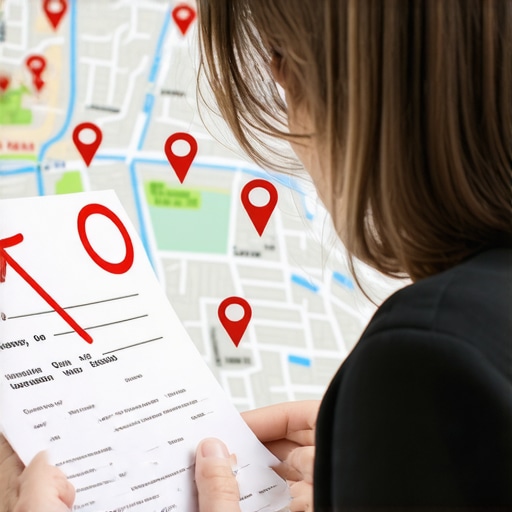
Start by searching for your business name combined with any old phone numbers or addresses you’ve used in the last decade. You might be surprised to find a 2014 listing on a niche directory that is still outranking your current info in certain local clusters. Use search strings like: "Business Name" + "Old Phone Number" or "Business Name" + "Old Street Address."
2. Use a Google Business Profile Audit Tool
Manual searching will only get you so far. To truly see what Google sees, you need a professional google business profile audit tool. These tools scan hundreds of directories simultaneously and highlight exactly where your NAP is broken. This is the fastest way to identify the “data leaks” that are draining your ranking power.
3. Tackle the Data Aggregators
Most small directories get their data from “Aggregators” like Data Axle and Neustar. If your info is wrong at the source, it will keep reappearing even after you fix it elsewhere. You must submit your correct, verified NAP to these major players to ensure long-term consistency.
4. Manual Cleanup of Top-Tier Citations
Once the aggregators are handled, focus on the “Big Five”:
- Yelp
- Facebook Business Pages
- Apple Maps
- Bing Places
- Better Business Bureau (BBB)
Ensuring these are identical to your GBP is non-negotiable for anyone looking to rank higher on google maps.
Professional Tools and Services to Automate the Fix
For many business owners, the prospect of manual citation cleanup is overwhelming. This is where a professional google maps ranking service or specialized local seo tools come into play. If you have dozens of inconsistent listings, using a service like BrightLocal or CitationBuilderPro can save you hundreds of hours of manual labor.
Furthermore, using a google maps rank tracker allows you to see the real-time impact of your cleanup efforts. As you fix your NAP, you will typically see your “Prominence” score rise, and your map pins will begin to migrate toward the top of the search results. For those looking for gmb seo tools that provide actionable insights, SEO Viper Tools offers a comprehensive suite designed to navigate the complexities of the 2026 algorithm.
Investing in local seo services that prioritize data integrity over “quick hacks” is the only way to ensure long-term stability. In 2026, the businesses that dominate the map pack aren’t necessarily the ones with the most backlinks – they are the ones with the cleanest data.
Conclusion: Reclaiming Your Spot in the Local Map Pack
Local SEO in 2026 is a game of precision. Mismatched contact details are no longer just a minor annoyance; they are a direct threat to your business’s survival in the digital marketplace. By understanding the 15/25/60 rule and recognizing that prominence is built on a foundation of trust, you can take the necessary steps to reclaim your 2026 search ranking.
Don’t let a phone number from five years ago keep you off the map today. Conduct a thorough audit, fix your inconsistencies, and provide Google with the clear, verifiable data it craves. If you’re ready to take your visibility to the next level, I recommend using SEO Viper Tools to monitor your progress and ensure your google business profile seo remains top-tier. For a comprehensive strategy, check out these Google Business optimization strategies every local business must know. Your customers are looking for you – make sure they can actually find you.