
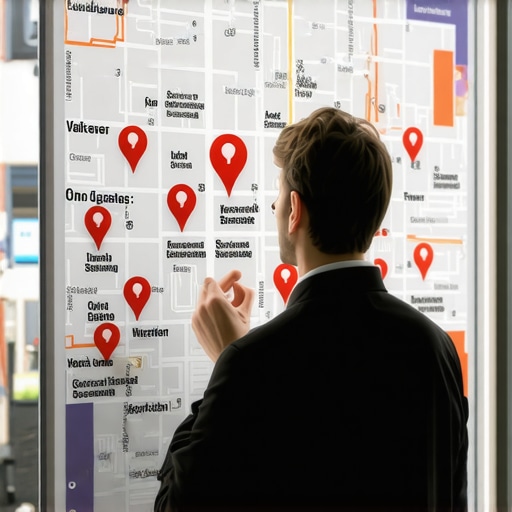
How to Find the Hyper-Local Phrases That Actually Drive Store Visits Using Google Business Profile SEO
As a local business owner, you’ve likely been told that ranking for your primary service is the holy grail of digital marketing. But as a specialist in google business profile seo, I’m here to tell you that the game has fundamentally changed. In 2025 and 2026, ranking for “Plumber” or “Coffee Shop” is no longer enough to guarantee foot traffic. The digital landscape has shifted from “Local SEO” to “Hyper-local SEO.”
The reality is that consumer behavior is becoming increasingly granular. People aren’t just looking for a service; they are looking for a service that exists within their immediate physical orbit – often defined by neighborhood boundaries, landmarks, or even specific street intersections. According to research highlighted by Jermina Menon on LinkedIn, Reliance Retail (which manages over 170 stores) discovered that what works at one store might totally flop just 10 kilometers away. This is because local store teams and residents understand micro-markets in a way that centralized, national planning never can. To win at the street level, your local business seo strategy must reflect the specific language of the neighborhood.
In this guide, I will walk you through the exact framework I use to help my clients dominate the local map pack seo by identifying the hyper-local phrases that actually convert into real-world store visits. We aren’t just looking for clicks; we are looking for customers walking through your front door.
Why Generic Keywords are Killing Your Foot Traffic
Many businesses make the mistake of focusing on “Broad Intent” keywords. While “dentist in Chicago” might have a high search volume, it is also incredibly competitive and lacks the high-conversion “Buying Intent” found in hyper-local searches. National brands with massive budgets often win these broad terms because they have the domain authority to do so. However, these national giants often lose at the street level because they fail to optimize for the “Proximity, Relevance, and Prominence” algorithm that governs the Google Map Pack.
Google’s algorithm is designed to provide the most relevant result for the user’s specific location. If a user is standing on the corner of 5th and Main, Google wants to show them the best option within a three-block radius, not a corporate headquarters ten miles away. This is why Why Local Plumbers Who Win Every Neighborhood Job Ignore Generic SEO Advice; they understand that “emergency drain repair in [Neighborhood Name]” is worth ten times more than “plumber” in terms of immediate ROI.
When you focus on google business profile seo, you are playing into the proximity factor. By identifying and targeting phrases that include neighborhood modifiers, you signal to Google that your business is the most relevant choice for that specific micro-moment. To start outperforming the big guys, you need to stop thinking like a national brand and start thinking like a local neighbor. Using specialized google business profile seo techniques allows you to capture this high-intent traffic before your competitors even realize it exists.
Mining Your Own Data: The GBP Insights Goldmine
Before you look at external tools, you need to look at the data you already own. Your Google Business Profile (GBP) dashboard contains a wealth of information that most business owners ignore. The “Queries used to find your business” section is a literal map of how your customers think.
When you dive into these insights, look for more than just your business name. Look for the “near me” variations and, more importantly, the specific street names or neighborhood clusters that appear. Are people finding you by searching for “hardware store near [Local Park]”? Or perhaps “best pizza near [Transit Hub]”? These are your hyper-local phrases.
Identifying these patterns manually can be time-consuming, which is why using a google business profile audit tool is essential. These tools can aggregate your query data and highlight which specific phrases are driving the most “Direction Requests” and “Phone Calls.” If you notice a trend where users are searching for your service alongside a specific landmark, that landmark needs to become a cornerstone of your local seo strategy.
Don’t just look at what is working; look for the gaps. If you are a bakery in the “East Village” but you see no traffic for “East Village bakery,” you have a relevance problem that needs to be solved through on-page optimization and GBP updates. This data-driven approach ensures that your google maps marketing is based on reality, not guesswork.
The “Street-Level” Keyword Research Framework
To truly master hyperlocal seo, you need a systematic way to discover the phrases your neighbors are using. Here is the three-step framework I use to build a street-level keyword list:
1. Neighborhood Landmarks and Transit Hubs
People navigate their lives by landmarks, not just zip codes. Use parks, stadiums, museums, and transit hubs as modifiers in your keyword research. A search for “coffee shop near Central Park” has a much higher intent than just “coffee shop.” Identify the top 5 landmarks within a 2-mile radius of your business and incorporate them into your service descriptions. This is a key part of How to Find the Neighborhood-Specific Phrases That Drive Real Map Traffic.
2. Hyper-local Slang and Informal Names
Every city has areas that locals refer to by names that don’t appear on an official map. For example, people in Denver might search for “LoDo” instead of “Lower Downtown,” or New Yorkers might search for “Dumbo” instead of “District Under the Manhattan Bridge Overpass.” If you only use official city names, you are missing the way locals actually speak. Use these informal names in your GBP posts and website content to build “Relevance” in the eyes of Google’s algorithm.
3. The “Service + Near [Landmark]” Formula
Combine your primary services with your landmark list. This creates a long-tail keyword strategy that is incredibly easy to rank for. For example, if you offer a google maps ranking service, you might target “google maps ranking service near the Tech District.” This specificity reduces competition and increases the likelihood of appearing in the coveted top 3 of the map pack.
To stay ahead of the curve, you should also look for 5 Hidden Search Terms to Fuel Your 2026 Local Traffic Growth, which often involve emerging neighborhood trends and new developments that haven’t been saturated by competitors yet.
Essential Tools for Hyper-local Discovery in 2025/2026
While manual research is vital, the right local seo software can give you a competitive edge. To truly understand how you rank across a city, you need to see the “grid.”
I recommend using Local Falcon for grid tracking. It allows you to see exactly where your ranking drops off. You might be #1 at your front door, but #10 just three blocks away. This visual data is crucial for identifying which neighborhoods require more hyper-local content.
For deeper analysis, SEO Viper Tools offers a robust suite of gmb seo tools that help you analyze competitor profiles. By seeing which keywords your successful competitors are using in their reviews and posts, you can reverse-engineer their success. Furthermore, a google maps rank tracker is indispensable for monitoring your progress in real-time. Local rankings are volatile; they can change based on the time of day or even minor algorithm tweaks. Constant monitoring ensures you can react quickly to any shifts.
Using these local seo tools allows you to move beyond basic optimization. You can start implementing 3 New Local Keyword Research Fixes for 2026 Store Visits, such as optimizing for “open now near me” and voice-search queries that are becoming the standard for mobile users.
Turning Phrases into Store Visits: Implementation Strategy
Finding the phrases is only half the battle; the other half is implementation. You need to weave these hyper-local terms into every facet of your Google Business Profile and your website.
- GBP Posts: Write weekly updates that mention local events, neighborhood news, or your proximity to landmarks. “Heading to the game at [Stadium Name]? Stop by for a pre-game meal!”
- Service Descriptions: Don’t just list your services. Describe them in the context of your area. “Providing expert dental care to the families of [Neighborhood Name] for over 20 years.”
- Review Responses: This is a secret weapon. When a customer leaves a review, respond by mentioning the neighborhood or a landmark. “Thanks for visiting us from [Street Name]! We love being part of the [Neighborhood] community.” This naturally adds hyper-local keywords to your profile through user-generated content and your responses.
My personal strategy, which I call The Content Move That Makes Local Neighbors Choose You Over National Brands, involves creating “Neighborhood Guides” on your website. By becoming the local authority on your area – not just your service – you build massive “Prominence” and “Trust” with both Google and your potential customers.
Conclusion: Winning the Micro-Market
Hyper-local SEO is no longer a luxury; it is a necessity for any brick-and-mortar business that wants to survive in an increasingly crowded digital marketplace. By shifting your focus from broad terms to street-level phrases, you are positioning your business to win the “micro-market.” Remember, the goal of google business profile seo isn’t just to be seen – it’s to be visited.
Start today by auditing your current performance. Use professional local seo software to identify where you stand and where your opportunities lie. If you find the process overwhelming, don’t hesitate to reach out for a professional google maps optimization service. Winning the map pack requires precision, data, and a deep understanding of the local landscape.
Focus on your neighbors, speak their language, and watch your store visits climb. The street level is where the real growth happens.