
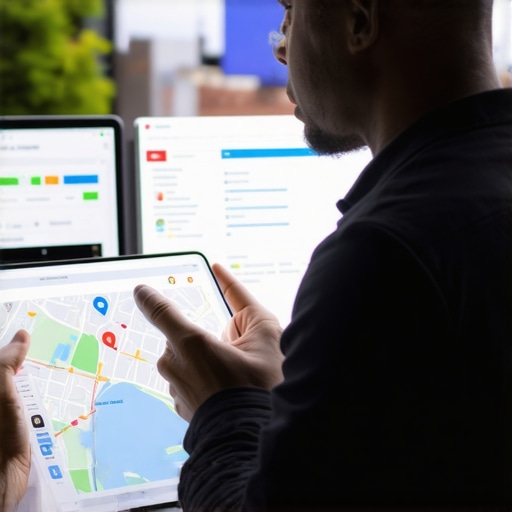
Mastering Local SEO for Maps: Beyond Basic Optimization
In the evolving landscape of local search, traditional SEO tactics are no longer sufficient to secure a dominant position on Google Maps or local pack results. Entrepreneurs and marketers must adopt a sophisticated understanding of how SEO for Maps integrates with broader local business strategies. This involves leveraging semantic keyword clusters, hyper-local content, and schema markup that align with user intent and Google’s AI-driven ranking algorithms.
The Role of Google Business Profile Optimization in 2026
Google Business Profiles (formerly GMB) continue to be pivotal for local visibility, yet the tactics to optimize these profiles have become more nuanced. Advanced Google Business profile optimization strategies now encompass managing user-generated content, utilizing new feature integrations like booking and product listings, and maintaining consistent NAP (Name, Address, Phone Number) data across diverse platforms. These elements collectively influence local rankings and local traffic growth.
Integrating Local Link Building with Map Optimization
Effective local SEO in 2026 hinges on strategic link-building that enhances your domain authority while reinforcing local relevance. Unlike traditional link acquisition, today’s tactics emphasize earning backlinks from hyper-local directories, neighborhood blogs, and community portals—these strengthen signals for map pack eligibility. By fostering relationships with local influencers and participating in community events, brands can organically develop citations that boost their position in local search results.
Why Is Your Local Map Ranking Still Fluctuating?
What are the nuanced factors causing fluctuations in local map rankings despite consistent efforts?
Frequent fluctuations often stem from algorithm updates that prioritize local signals differently, the presence of spam or fake reviews, and inconsistent profile data. Keeping abreast of these variables requires an analytical approach, integrating detailed audits and real-time monitoring to adapt strategies promptly. Furthermore, leveraging schema markup to enhance listing features can help stabilize rankings amidst the volatility.
Adapting your SEO to 2026’s landscape demands ongoing learning and tactical agility. Engage with our detailed guides or contribute insights from your local marketing experiments to push the boundaries of what local SEO can achieve.
Optimize Neighborhood Pages to Capture Hyper-Local Traffic
Creating dedicated neighborhood or community pages on your website is a powerful way to target specific localities and improve visibility in hyper-local searches. By incorporating unique content that highlights local events, landmarks, and testimonials, businesses can establish authority and relevance within their immediate vicinity, boosting their chances to appear in the coveted map pack.
Leverage Schema Markup for Enhanced Map Pack Visibility
Implementing structured data through schema markup remains a cornerstone of advanced local SEO. Utilizing schemas like LocalBusiness, Service, and Product can provide Google with rich contextual signals about your offerings, making your listings more informative and attractive in search results. This not only aids in better rankings but also enriches your snippets, influencing click-through rates.

Image showing an annotated example of a website’s neighborhood page optimized with schema markup and local content elements to attract hyper-local traffic in 2026.
Could Voice Search Be Reshaping Local SEO in 2026?
As voice search adoption accelerates, optimizing for conversational queries and natural language becomes critical. Incorporating long-tail keywords and question-based phrases aligned with user intent can position your business as a prime candidate for voice-triggered local results, as detailed by leading SEO authorities here. Understanding the nuances of voice search optimization is no longer optional but essential for maintaining competitive edge in local visibility.
Stay ahead in local SEO by experimenting with new schema features, analyzing voice search patterns in your area, and adapting your content accordingly. Share your insights or ask questions in the comments to foster a community of innovative local marketers aiming for peak 2026 performance.
Harnessing Advanced Data Analytics for Precise Local SEO Targeting
While traditional local SEO practices laid the groundwork, the integration of cutting-edge data analytics now unlocks unprecedented precision in targeting and ranking optimization. By deploying sophisticated tools like predictive analytics and machine learning algorithms, businesses can identify emerging local trends, user behavior patterns, and competitor movements with remarkable accuracy. These insights enable marketers to craft hyper-tailored content, optimize for long-tail local keywords, and anticipate algorithm shifts before they occur, effectively turning data into a strategic advantage.
How can local businesses implement predictive analytics to forecast ranking fluctuations?
Implementing predictive analytics involves integrating your local SEO efforts with platforms capable of aggregating and analyzing real-time data from sources like search engine snippets, review platforms, and social media trends. Tools such as Google Cloud’s BigQuery or Tableau, combined with specialized SEO datasets, can model potential ranking trajectories. By analyzing factors like review velocity, backlink acquisition rates, and engagement metrics, businesses can proactively adjust their strategies to reinforce rankings. According to SearchEngineLand, predictive analytics is becoming indispensable in preempting ranking volatility in competitive landscapes.
Interested in transforming your local SEO through data? Connect with our experts to explore bespoke analytics solutions tailored to your market niche.

Conceptual diagram illustrating the flow of local data analytics, highlighting key inputs like reviews, backlinks, and engagement metrics feeding into predictive models.
Leveraging Behavioral Signals to Enhance Map Visibility and User Engagement
Beyond algorithmic considerations, understanding and influencing user behavior plays a pivotal role in local map ranking success. Search engines increasingly interpret behavioral signals — such as dwell time, bounce rate, and click-through patterns — as indicators of relevance and satisfaction. By optimizing your Google Business Profile and website experience to promote engagement (for instance, through compelling CTA buttons, virtual tours, or customer testimonials), you can positively influence these signals.
This approach extends to harnessing behavioral targeting in advertising campaigns, where geo-fenced ads activate only within relevant neighborhoods, prompting immediate interactions that translate into local citations and improved rankings. Moreover, integrating customer feedback loops and loyalty programs fosters sustained engagement, generating fresh signals that bolster your local authority in the eyes of search engines.
What innovative methods are brands using to turn local user engagement into SEO gains?
To convert engagement into tangible SEO benefits, brands are deploying tactics like personalized content delivery based on user location history, interactive virtual events tailored to local communities, and social proof campaigns that encourage user-generated content. For instance, some companies have implemented location-specific quizzes and contests, incentivizing participation while simultaneously collecting valuable behavioral data. As cited by Moz, these practices not only enhance local relevance but also create a virtuous cycle of engagement that feeds directly into improved map rankings.
If you’re eager to explore innovative strategies that turn local user behavior into a competitive edge, our team offers tailored consultations designed to elevate your local presence in a fast-evolving digital world.
Deciphering Google’s Algorithm Nuances for Local Search Mastery
In the high-stakes arena of local SEO, staying ahead requires a granular understanding of Google’s evolving ranking mechanics. Recent studies indicate that AI-driven features like Google’s BERT and MUM models increasingly interpret contextual relevance over mere keyword matching, demanding sophisticated content strategies that mirror real-world user intent. Analyzing how these models weigh local citations against semantic relevance can unlock new positioning avenues. For an exhaustive deep dive, see Moz’s latest insights on algorithmic shifts.
Harnessing Hyper-Personalization to Cultivate Local Authority
Moving beyond generic local optimization, hyper-personalization leverages behavioral data, chat interactions, and real-time geo-targeting to craft uniquely tailored user experiences. Implementing AI-powered chatbots that provide dynamic, community-specific responses not only enhances user engagement but signals topical authority to search engines. This approach transforms static listings into vibrant touchpoints that resonate with local audiences, culminating in improved map pack visibility. According to Gartner’s latest report on customer experience, hyper-personalization increases local brand affinity by up to 50%.
Which Content Formats Amplify Your Local Visibility Most?
Innovative content presentation formats like interactive maps, augmented reality tours, and localized video series have shown tremendous promise in engaging niche audiences. For instance, virtual walkthroughs of neighborhood landmarks or behind-the-scenes community stories foster emotional connections that drive organic citations and backlinks. The integration of these formats with schema markup further amplifies their discoverability in map results. A 2024 survey by BrightLocal reveals that businesses incorporating rich media into their local sites experience a 35% uplift in map rankings and click-through rates.
How Does Structured Data Influence Map Pack Stability During Algorithm Fluctuations?
Advanced schema markup not only enhances listing appearance but also acts as a stabilizing force amidst volatile algorithm updates. By meticulously implementing schemas such as LocalBusiness, Event, and Service, brands transmit nuanced contextual signals that reinforce their relevance. This layered approach mitigates sudden ranking drops by providing search engines with comprehensive, trustworthy data points, ensuring consistent visibility. The authoritative resource Google’s own structured data documentation offers invaluable best practices.

Illustration of a website’s rich schema implementation, showcasing how structured data enhances local search prominence amid algorithm shifts.
Adapting to Voice Commerce’s Surge in Local Searches
Voice search continues to disrupt traditional local SEO paradigms, emphasizing conversational, long-tail query optimization. Capitalizing on this trend involves deploying dynamic FAQ sections, optimizing for natural language, and integrating schema for voice-assisted results. Insights from the Voice Search Council suggest that brands contextualizing content for voice inquiries can expect a 40% increase in local engagement. Staying attuned to evolving voice device behaviors and user preferences is crucial for sustained dominance.
Engage with our specialized consultancy to refine your voice search strategy and ensure your business is the primary answer when locals speak into their devices.
Expert Insights & Advanced Considerations
Harness AI-Driven Localization to Outpace Competitors
By leveraging advanced machine learning models, local businesses can anticipate searcher intent shifts and dynamically tailor content, ensuring top rankings amidst evolving algorithms.
Prioritize Hyper-Personalization for Authentic Engagement
Utilize behavioral data and real-time interactions to craft uniquely tailored user experiences, fostering trust and boosting map visibility through genuine customer connections.
Integrate Multimodal Content for Richer Listings
Combine visuals, videos, and virtual tours embedded with schema markup to create immersive profiles that attract and retain local search users.
Adopt Predictive Analytics to Foresee Market Trends
Implement tools capable of analyzing review patterns, backlink velocity, and engagement metrics to proactively optimize your local presence before fluctuations occur.
Innovate Voice Search Optimization for Hands-Free Access
Focus on conversational keywords, Question Answering, and schema enhancements to align with the increasing prevalence of voice-activated local searches.
Curated Expert Resources
- Google’s Structured Data Documentation: Offers comprehensive guidance on implementing schema markup for enhanced visibility.
- BrightLocal’s Local SEO Reports: Provides industry benchmarks and trend analyses tailored for 2026 insights.
- Moz’s Local Search Strategies: Shares nuanced tactics regarding algorithm updates and ranking factors.
- Search Engine Land’s Predictive Analytics Articles: Explores how data analysis forecasts local search dynamics.
- Gartner’s Personalization Frameworks: Details on applying hyper-personalization to customer engagement and SEO.